Today we are going to do some of what our friends across the pond refer to as "maths."
This maths has been sparked by some recent "anecdata" in my bird photography.
I have recently started using a Nikkor 300m IF-ED f2.8 prime. (From here on out I am going to refer to this as "the Nikkor prime") Last year, I purchased a Tamron 100-400mm f4.5-6.3. (From here on out I am going to refer to this as "the Tamron")
Both are full-frame compatible lenses that I am using on my Nikon D500 APS-C for "effective" focal lengths of 450mm and 150-600mm respectively.
For both tests, my Nikon D500 was set to use Auto ISO, with a max ISO of 16,000. I shot in Speed priority, with a speed of anywhere between 1/2000 and 1/3000, as light allowed. Both tests had poor lighting. My test with the Nikkor prime was on a foggy morning as the sun was coming up. My test with the Tamron was on a cloudy day, mostly under tree cover. Neither test used a monopod or any other form of support. All shots were handheld.
Anecdata
My anecdata is thus:
The Nikkor prime let me shoot at fast shutter speeds, even up to 1/4000th of a second, while maintaining sharp focus and without maxing out the ISO and underexposing the subject.
The Tamron let me shoot up to 1/2500th of a second, while maintaining "pretty-good" focus with some motion blur, and noticeably more grain.
Hypothesis
My hypothesis then is as follows:
- The Tamron must be using higher ISO values to get the same shutter speeds as the Nikkor prime.
- The Tamron, even with its stabilization, may be struggling with birds in flight at 1/2500.
- The only bird in flight that I got good results for with the Nikkor prime was a Great Heron, which flies slowly in comparison with a Red-tailed Hawk. This may negate point 2.
- The faster auto-focus on the Tamron did not automatically deliver sharper images, even for birds at rest.
Maths
Some maths:
According to this detailed breakdown of aperture values, a lens with an aperture of f6.3 will allow 5 times less light into the camera, as a lens at f2.8.
f/2.8 -> f/4.0 = 1 stop -> 1/2 light.
f/4.0 -> f/5.6 = 1 stop -> 1/2 light.
f/5.6 -> f/6.3 = 1/3 stop -> 4/5 light.
1/2 x 1/2 x x 4/5 = 4/20 -> 1/5 light.Similarly, let's call the test shots with the Nikkor prime, 1/3000th of a second. The Tamron shots were taken at 1/2500th of a second.
Using this handy stops calculator we can see that 1/3000th is 1/3 of a stop less light than 1/2500th of a second, which should be equal to a 20% reduction in the amount of light being let in.
1/3000 -> 1/2500 = 1/3 stop -> 4/5 light.Conversely then, the Tamron is letting in ~1.25 times the light that the Nikkor prime is, due to its lower shutter speed.
This should cancel out the 1/3 stop lost from f/5.6 -> f/6.3.
This leaves 2 stops of difference remaining, or 4 times less or more light to account for.
This is where ISO comes in.
ISO is the ability of the camera to increase the intensity of the light that is hitting the sensor. It can be thought of similarly to gain, in that it is an amplification of sensitivity to a signal.
I do not have two photos to compare side-by-side for ISO, as the two photo outings took place a week apart, and at different locations with different weather and different subjects. However, we know that there is still a two stop difference SO...
Example Photos
For a photo like this one of a Ruby-crowned Kinglet:
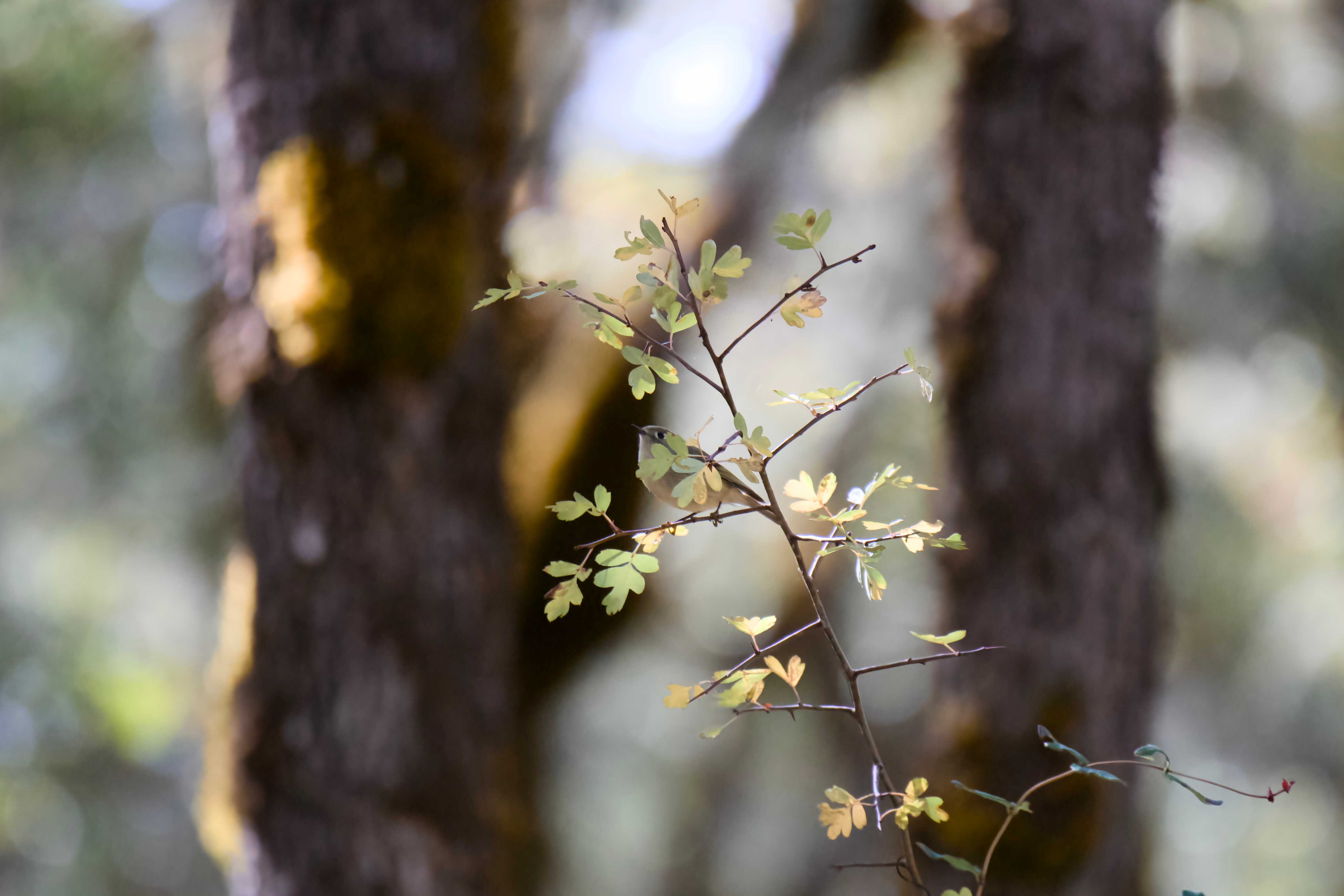 It was shot at ISO 7200, at 600mm f/6.3 with a shutter speed of 1/2500th of a second.
If I had the Nikkor prime here, it could have shot the same image, at f/2.8, 1/300th of a second at ISO 2000.
That's a strong reduction in ISO, which can help to reduce overall grain in the image, and preserve color depth. But does it matter?
My anecdata was telling me that the lens with the smaller aperture (the Tamron) was under-performing compared to my massive fast lens (the Nikkor prime). However, I think the real culprit is that my skills need polishing.
Take this photo for instance:
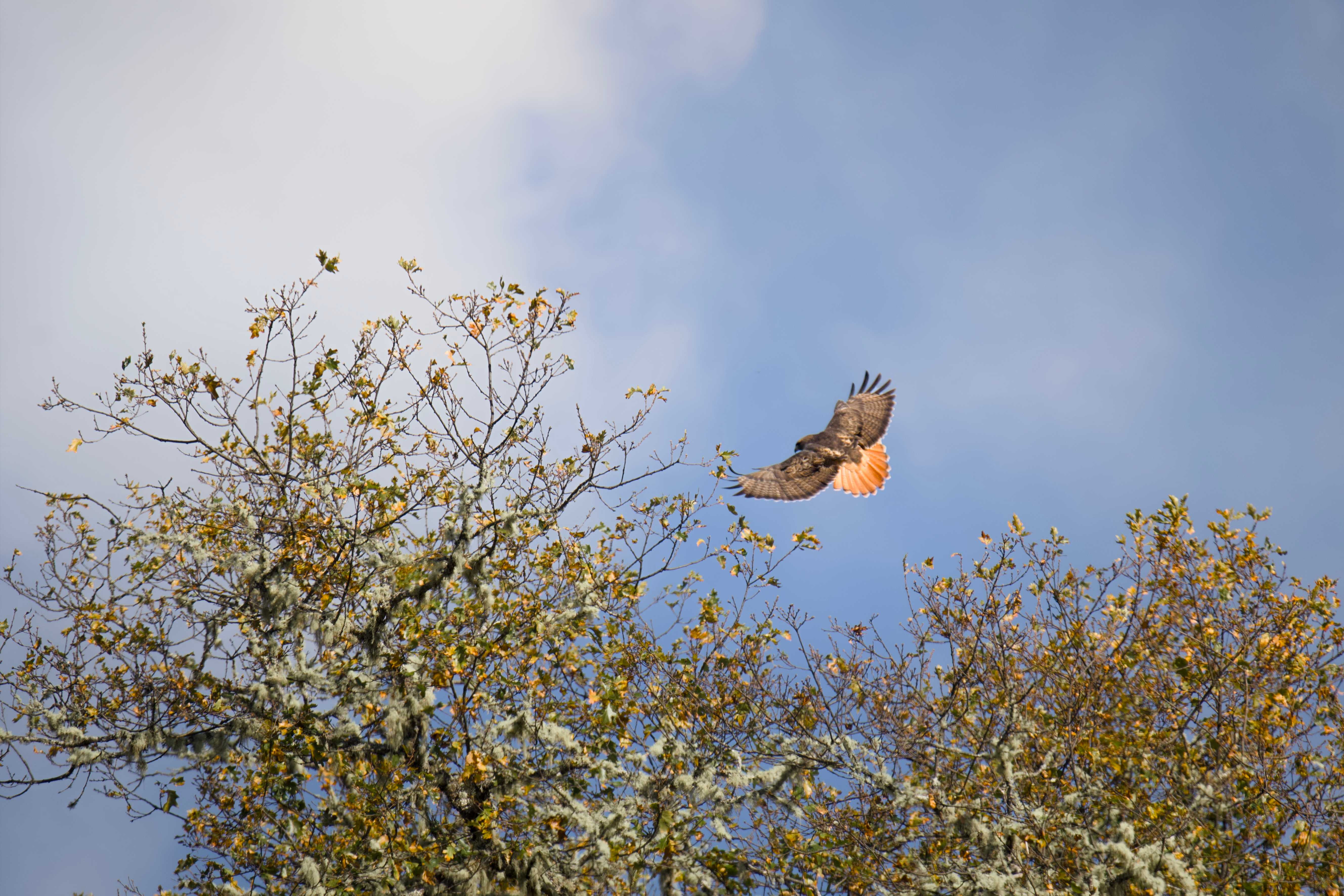 If you zoom into the image much at all, you'll see that the focus on the hawk is soft and that there's blur at the wingtips.
This photo was captured at 1/2000th of a second, 600mm, f/6.7, ISO 400.
Three things that would have made this image better:
- There's so much room in the ISO where I could have easily pushed the shutter speed to make the moving bird sharper.
- I was using group AF, and the tree leaves were picked up as being the subject of AF, instead of the bird. I should have used single-point, or tried Dynamic or 3D instead.
- f/6.7 is just barely more closed than the aperture needed to be. f/6.3 is right there! This would have afforded even more room for shutter speed with low ISO.
I think the photo of the Ruby-crowned Kinglet above suffers from similar problems. Though the aperture is right in that image focus is still soft. I think I used group AF for that one as well, and it picked up the leaves just in front of the bird, rather than the birds eye.
An far sharper image is this one, shot on the Nikkor prime:
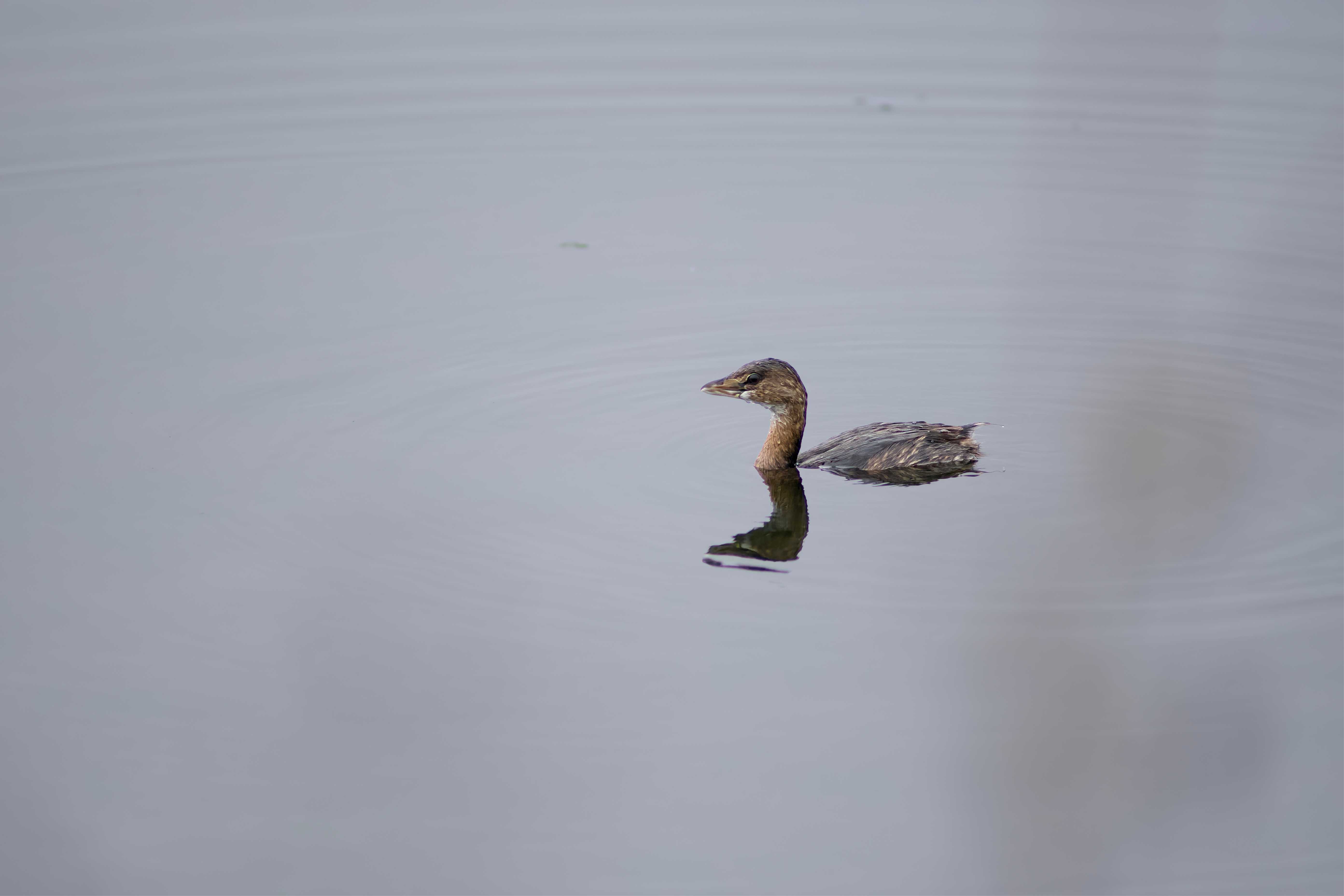 1/4000th of a second, f/2.8, ISO 500, 450mm.
Visually, I think this is the least interesting of the three images in this blog post. But the Grebe in this photo is so sharp. From my subjective experiences, I thought that it was purely because the Nikkor prime is a faster lens, that lets in more light. But notice here that the subject in this image is a high-contrast bird, against a clean background. Other than the tall grass blurring the right side of the image, there is nothing else that could distract the AF sensors from grabbing focus on the subject
Additionally, this bird is basically at rest, floating in the water so shutter speed here is not nearly as important as it is when tracking a hawk in flight.
So then, is it pointless to carry a massive telephoto?
Obviously not, otherwise nobody would ever carry them. The extra glass, and extra weight by extension, does make a significant difference. It is simply not the only thing that matters for high-quality wildlife photos.
Both lenses have both strengths and weaknesses. The Nikkor prime really does let in more light. 5 times more light to be exact. I can shoot at 1/4000th of a second, like the grebe photo above, without needing much compensation from ISO because the aperture can be so wide. Even still, the Tamron was nowhere near its performance limits on the photos that I found lacking.
Hypotheses Proven
- The Tamron must be using higher ISO values to get the same shutter speeds as the Nikkor prime.
- The faster auto-focus on the Tamron did not automatically deliver sharper images, even for birds at rest.
The Tamron did tend to need a higher ISO, as is expected of the smaller aperture with all else being equal, but that is not the primary issue with those photos.
The faster auto-focus on the Tamron also did not automatically deliver sharper images. The focus problems I was observing were most prevalent with fast birds in flight (higher shutter speed needed) and branches and leaves in the foreground (different camera auto-focus settings needed). None of these problems were caused by the lens.
Hypotheses Disproved
- The Tamron, even with its stabilization, may be struggling with birds in flight at 1/2500.
- The only bird in flight that I got good results for with the Nikkor prime was a Great Heron, which flies slowly in comparison with a Red-tailed Hawk. This may negate point 2.
This makes sense, as the second hypothesis negates the first. It was not the fault of the lens, it had to do with shutter speed specifically and maybe some handheld instability on my part especially for the hawk in flight at 600mm focal length.
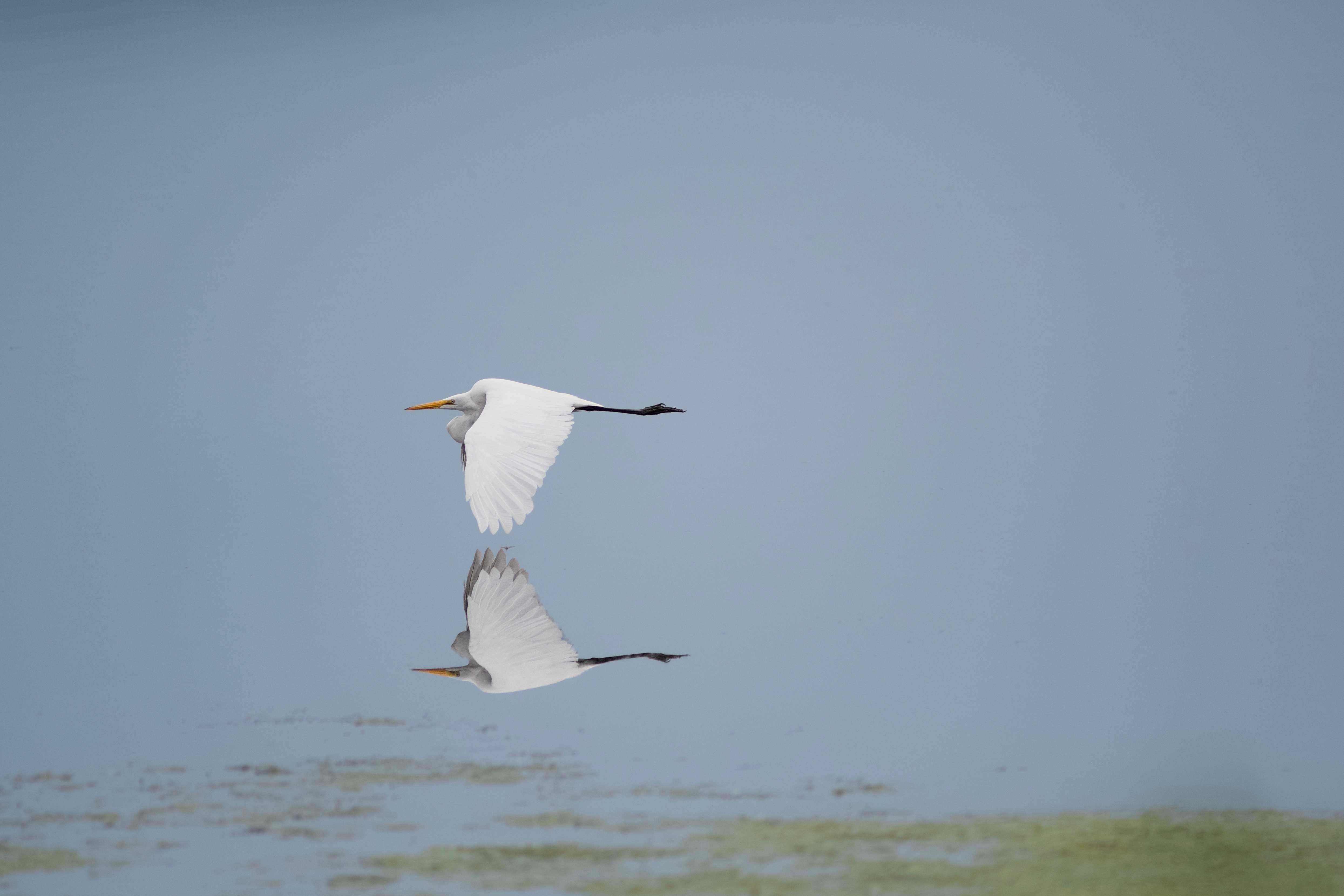
For point two, the Heron was photographed at a higher shutter speed, at a shorter focal length, and the subject was moving slower in general. Additionally, it also benefitted from a clean background.
I believe this photo was already in my last post, but I've referred to it enough here that I'll include it for comparison:
Conclusion
I will continue to weight the pros and cons of each lens against its intended use, and get a more solid feel for where each fits over time, but the point that I am trying to make is this:
More glass is not always better, less glass is not always worse. More light is better, but it doesn't make up for gaps in skill. Use what you have, and don't stop learning.